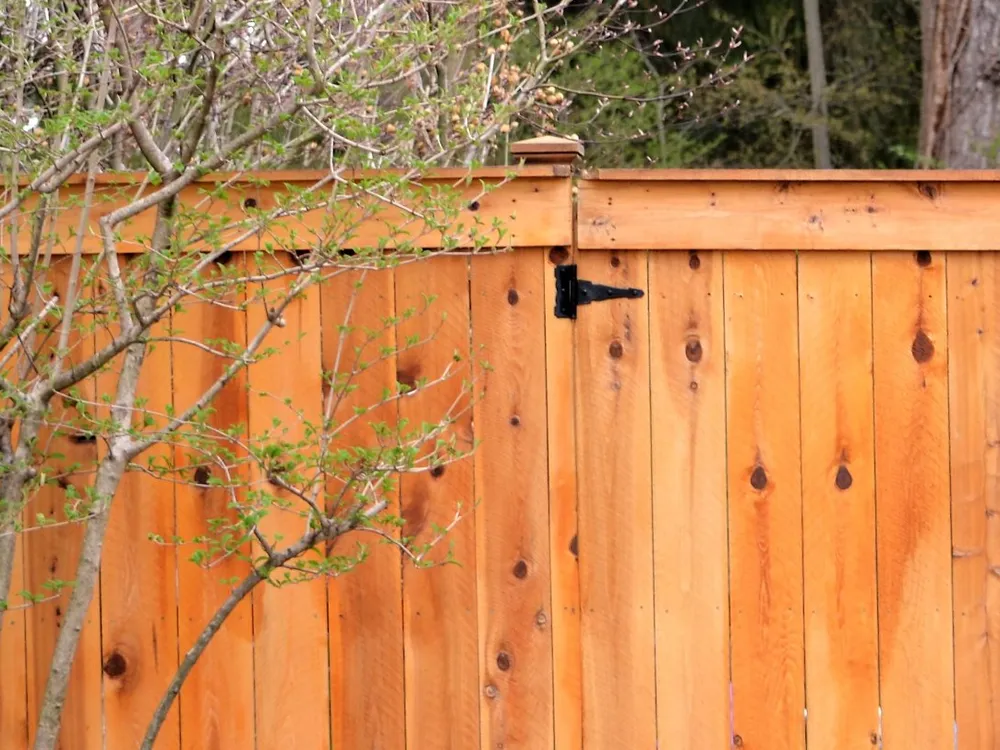
Who a wood privacy fence suits
A wood privacy fence suits a yard where the view is the problem. If people can see into the patio from the road, if the neighbor's kitchen window looks straight at your deck, or if a dog loses its mind every time a car slows down, a solid fence fixes the cause. It also gives children and pets a boundary they can see, and it hides trash cans, a trailer, a generator or a work area.
- Backyards that face a street, a parking lot or a neighbor's windows.
- Homes with dogs that bark at passersby, or small children who need a clear boundary.
- Patios, hot tubs and gardens that need a screen.
- Owners who like real wood and accept a new finish every few years.
It is not right for every yard. For a low, open edge along a sidewalk, look at picket fence. To hold a line and see through it, chain link is the plainer tool. If the animals are horses or cattle, start with farm and ranch fence instead.
Solid Rock Fencing builds wood privacy fence in Ohio and Pennsylvania from its base in Bristolville. The owner was raised Amish, and the way the company thinks about posts, gates and straight lines is built on that craftsmanship. The company is locally owned and family owned, and the owner states that the materials are high quality and premium.
Board styles and how they differ
The main difference between privacy styles is how the boards meet: tight and flat, overlapped, or alternated with small gaps. We found no university or government guide that defines board styles, so this table describes how each is built in general. It is a way to compare, not a standard.
| Style | How it is built | What you get | Watch for |
|---|---|---|---|
| Solid board | Boards side by side on the rails, one layer | The simplest solid look | Gaps can open as wood dries and shrinks |
| Board-on-board | A second layer of boards covers the seams | Seams stay covered when boards move | More material, more labor, a heavier panel |
| Shadowbox | Boards alternate sides of the rails, with small spaces | Blocks a straight view, passes some air, looks the same from both sides | Less private at an angle, so ask to see a sample |
Wind and open lots
A fence with no gaps catches wind the way a sail does, and the force ends up in the posts and where they sit in the ground. Shadowbox lets some air through. We found no neutral wind figures for residential privacy fence, so we quote none. The practical points are post size, post depth, how the rails tie to the posts and how exposed the yard is.
Height, permits and local rules
Height and permits are set by your city, village, township or homeowners association, not by one statewide rule. In Ohio the Residential Code of Ohio generally requires a building permit only for a fence over 6 feet, according to an Ohio permit guide, but the zoning rules that cap height and placement are local. Front-yard fences are often limited to about 4 feet and side and rear fences to 6 feet, though cities vary.
| Question | Who answers it | What to ask |
|---|---|---|
| Do I need a permit? | City, village or township zoning office | Is a permit required for my height and style? |
| How tall can it be? | Local zoning rules | What is the limit in the front, side and back yard? |
| How close to the lot line? | Zoning rules and your survey | What setback applies? |
| Style or color rules? | Homeowners association or deed | Does the association approve a sketch first? |
Bring the address, height and a sketch, and ask for the answer in writing. Our fence permits and rules page lists who to call by county.
Posts and rails decide whether the fence stays straight
The posts decide how long a privacy fence stays straight, because they carry the wind load and sit in wet ground. Wood fences rot and lean at the post long before the boards give up, and the sources agree on where: at the ground line, where moisture meets air.
Post rating and the end tag
The American Wood Protection Association rates posts that touch the ground at Use Category 4A or higher, and fence pickets above ground at 3B or higher. The USDA Forest Products Laboratory warns that lumber sold for above-ground use only holds less preservative and should not go in the soil. The AWPA also notes that treated lumber two inches thick or less may be treated for above-ground use only, so a thin board buried in dirt can rot early. The end tag should show the use category, the preservative and the retention.
Depth and frost
Frost heave pushes posts up when moisture in fine-grained soil freezes. It needs a freezing plane, soil that lets water move and a water supply. Silt and fine sand heave easily, while clean gravel generally does not. Frost depth in the Ohio and Pennsylvania documents we reviewed runs from about 30 to 42 inches, and Penn State maps show a wider spread across Pennsylvania. Your township or building office sets the number for your site. Penn State Extension, writing about horse fence, gives about 36 inches for a line post and about 48 for corner and gate posts, which is another fence type.
Concrete or tamped soil
The sources disagree. University of Wisconsin Extension says cement can trap moisture near the top of a post and speed rot. The Forest Products Laboratory advises keeping concrete at least 6 inches below the ground line. University of Tennessee reports driven posts are 1.7 times as strong as tamped posts. Concrete is widely accepted for gate and corner posts. A good installer can tell you why they chose a method for your soil and drainage.
Fasteners and wood
The Forest Products Laboratory recommends aluminum or stainless steel nails because iron nails rust and streak the boards, and the wood treatment industry recommends hot-dip galvanized or stainless fasteners for modern treated lumber. Keep boards off the ground, and leave clearance between the house and the fence where termites are a concern.
On species, the Forest Products Laboratory lists cedars, junipers, redwood, black locust, osage-orange and several oaks as having resistant heartwood, while untreated pine posts are estimated at about 3 to 6 years in the Midwest and Northeast. Penn State Extension says a pressure-treated post can last 10 to 25 years, and Kentucky Extension says 20 to 35 for properly treated and installed pine. Those are ranges from the literature, not a promise about any one fence, and no neutral source gives a lifespan for a whole privacy fence.
Gates in a privacy fence
The gate is the part you use every day, and it fails first if the post is too small. A solid-board gate is heavy, and its weight pulls on the hinge post with every swing. Frost can push a post out of the ground and the gate then tips it further, which is why a gate that drags often points to a post that has moved.
- Size the opening for what has to pass: a wheelbarrow, a mower, a trailer. We found no neutral source for a standard residential walk gate width.
- Ask what hardware goes on, since structural steel hinges and keepers keep a gate level.
- A diagonal brace or cable from the top of the gate post to the next post shares the load and helps stop sag.
The gates page covers walk gates and drive gates in more detail.
Slopes and uneven ground
A privacy fence on a slope can follow the ground or step down in level sections, and the two look different. Following the grade keeps the bottom close to the soil along the whole run. Stepping gives level tops and leaves a triangular gap under each step that gets filled in. We settle the choice on site. University of Missouri Extension notes that difficult ground adds cost, and that each corner or gate adds time and expense.
Staining, sealing and painting
Wood outdoors needs a finish, and the finish is the upkeep. The Forest Products Laboratory says unfinished wood weathers to gray and recommends a nonpigmented water repellent at construction. It prefers pigmented penetrating stains over paint, because semi-transparent stains soak in without forming a film, so they do not crack or peel. Solid Rock Fencing also paints and stains fences, which many fence companies do not offer. See fence painting and staining.
| Finish | How it behaves | Interval from the sources |
|---|---|---|
| Water-repellent preservative | Soaks in, little color | 1 to 2 years (Purdue) |
| Semi-transparent stain | Soaks in, fades rather than peels | 2 to 4 years on new wood (Purdue); 5 to 8 on rough-sawn cedar siding (Forest Products Laboratory) |
| Paint or solid stain | Forms a film | A second topcoat approximately doubles paint life (Forest Products Laboratory) |
These intervals cover exterior wood in general and are not fence-specific. Purdue gives a simple test: splash water on the boards. If it beads, the finish still works.
Timing on new treated wood
Treated lumber arrives wet. A preservative maker says it is typically ready for finishing about 60 days after installation, depending on sun, temperature and weather, and suggests a water drop test: if drops soak in readily, the wood is dry enough. The Forest Products Laboratory says paint blisters when wood is above 20 percent moisture, and end grain absorbs water faster than the face, so finishes fail there first.
Maintenance through the year
A privacy fence needs a look each spring and fall and a finish on a schedule set by the product. The sources give no month-by-month plan, so this is general good practice.
| When | What to check |
|---|---|
| After winter | Push on each post, look at the bottom boards, check hinges and latches |
| Spring | Clean off mildew; Purdue's mix is 1 cup household bleach to 3 cups water, never mixed with ammonia |
| Summer | Trim vines off the boards and clear mulch and soil from the base |
| Fall | Tighten loose boards and gate hardware before snow adds load |
Neighbors and property lines
The fence belongs on your side of a line you have confirmed. Ohio's partition fence law, Revised Code chapter 971, does not apply to lots inside municipal corporations or to adjoining properties laid out into lots, so a typical in-town lot falls outside it. Pennsylvania's fence law is described as applying to improved, occupied farm and ranch land. Neither tells you where your line is.
- Find the corner pins and compare them with your deed and recorded plat.
- A licensed professional surveyor can set or confirm monuments.
- Tell the neighbor early, and check your deed for easements that limit where a fence can sit.
See fence laws in Ohio and Pennsylvania for the statutes in more depth.
How a privacy fence job goes
A job runs from a phone call to a walk-through of the finished fence, and the steps are the same in every yard.
- Call and describe the yardTell us where the fence goes, how tall and where gates should be. Call (440) 241-4312.
- FREE estimate on siteWe walk the line, look at slope, trees and soil, and talk through style, gates and finish.
- Confirm the line and the rulesYou confirm the property line and check height limits, permits and HOA rules.
- Locate utilitiesThe digging crew calls 811 first: at least two working days ahead in Ohio, three business days in Pennsylvania. See call 811.
- Set posts and gate postsCorners, ends and gate posts go in first, then line posts.
- Hang rails, boards and gatesRails and boards go on, gates are hung, and we walk the fence with you.
- FinishStain or paint goes on once the wood is ready for it.
Solid Rock Fencing offers a 10 year workmanship warranty with written terms in the estimate. It covers defects in workmanship, not weather, impact, animals or normal wood aging.
Mistakes to avoid
Most privacy fence mistakes are made before the first post goes in.
- Choosing a height before checking the front-yard limit or HOA rules.
- Guessing the property line instead of confirming it.
- Setting above-ground rated posts in the soil.
- Using iron nails that rust and run down the boards.
- Letting mulch or soil pile against the bottom boards.
- Finishing treated wood while it is wet, or waiting until the boards are gray and dry.
- Hanging a heavy gate on a post sized for the fence line.
Get your FREE estimate
Tell us what you are fencing and where. We will talk it through with you and come out to walk the line.
Questions we hear
Do I need a permit for a wood privacy fence in Ohio?
The Residential Code of Ohio generally requires a building permit only for a fence over 6 feet, but cities, villages and townships set their own zoning rules on height and placement, and a homeowners association may add more. Check with your local zoning office before you build. This is general information, not legal advice.
How tall can a privacy fence be?
Local rules decide. Ohio front-yard fences are often limited to about 4 feet and side and rear fences to 6 feet, but it varies. One township we reviewed allows 6 feet 8 inches overall and 3 feet in the front setback. Call your zoning office, since the answer depends on your address.
Is shadowbox or solid board better for privacy?
Solid board and board-on-board give the most privacy, because there are no gaps. Shadowbox lets some air through and looks the same from both sides, but a person at an angle may see between the boards. Ask to see a sample section and decide based on how much sightline you need to block.
Should fence posts be set in concrete?
The sources disagree. Wisconsin Extension warns concrete can trap moisture and speed rot, and the Forest Products Laboratory keeps concrete at least 6 inches below the ground line. Concrete is widely accepted for gate and corner posts. The right choice depends on your soil, drainage and what the post has to hold.
How often should a wood privacy fence be stained?
Purdue Extension gives 2 to 4 years for a semi-transparent oil-base stain on new wood and 1 to 2 years for a water-repellent preservative. Splash water on the boards. If it beads, the finish still works. These are general exterior wood intervals, not a promise for any one fence.
How long should I wait to stain a new treated wood fence?
A preservative maker says treated wood is typically ready about 60 days after installation, depending on sun and weather. Use the water drop test: if drops soak in readily, the wood is dry enough. Staining wet wood traps moisture and can cause blistering and peeling.
Can you repair or restain a privacy fence you did not build?
Yes. Solid Rock Fencing does fence repair and also paints and stains fences, which many fence companies do not offer. Call (440) 241-4312 and describe the fence, its age and what is wrong with it, and we will set up a FREE estimate to look at it in person.
Does Solid Rock Fencing build wood privacy fence?
Yes. Solid Rock Fencing is a locally owned, family owned fence and gate contractor based in Bristolville, Ohio, serving Ohio and Pennsylvania. Call (440) 241-4312 or use the FREE estimate page and tell us the height, the length and where gates should go.
- American Wood Protection Association residential use category guide
- American Wood Protection Association, homeowner information
- USDA Forest Products Laboratory, Protecting Wood Fences for Yard and Garden (1979)
- USDA Forest Products Laboratory, Finishing of Wood (AH-647)
- Purdue Extension, Exterior wood finishing (NCR-132)
- University of Wisconsin Extension, Setting fence posts
- University of Tennessee Extension, PB1541 fencing
- Penn State Extension, Fence Planning for Horses
- Kentucky Extension, Fence posts (FORFS 03-05)
- National Research Council Canada, Frost action in soils (CBD-26)
- University of Missouri Extension G1193, fence costs
- Viance, Staining decks and fences
- Design World, Fasteners for pressure-treated wood
- Grainews, Tips to prevent and fix a sagging livestock gate
- Michigan State University chain link fences and gates construction standard
- Ohio fence permit guide (Residential Code of Ohio summary)
- City of Columbus fences form
- Poland Township zoning, fences and walls
- Pennsylvania Uniform Construction Code, Chapter 403
- Trumbull County Planning Commission, plats and zoning
- Bristol Township, Ohio zoning
- Ohio Revised Code section 971.03
- Pennsylvania Farm Bureau, boundary and fencing laws
- Ohio Administrative Code chapter 4733-37, boundary surveys
- OHIO811 homeowner information
- PA One Call, homeowner FAQs